How Hedge Funds Are Using AI for Research in 2026
Discover how hedge funds use AI for research in 2026 — from alt-data ingestion to equity research automation and portfolio monitoring.
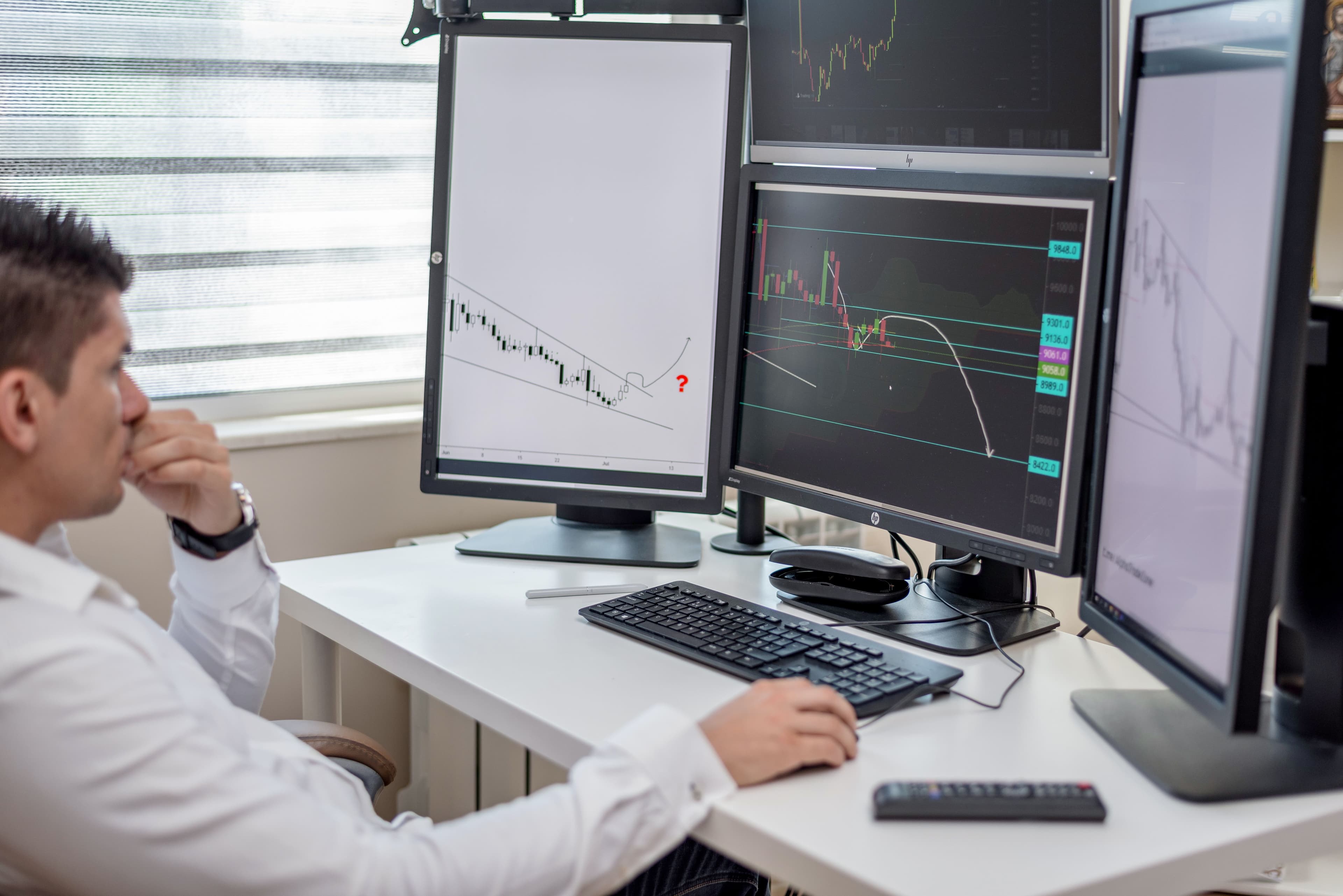
TL;DR - Hedge funds now use AI agents to ingest and triage alt data at a scale no human team can match. - Investment research automation cuts first-draft memo time from days to under two hours. - AI is strongest in pattern recognition, data synthesis, and portfolio monitoring, not in replacing the senior analyst's judgement call. - The buy-side research process is shifting: junior analysts spend less time on grunt work and more time stress-testing AI-generated theses. - Model maintenance, keeping prompts, data feeds, and financial models calibrated, is fast becoming the new "quant ops" discipline. - Platforms like OpenHelm give fund teams a governed, auditable environment to run these workflows without sprawling Python scripts.
---
The Research Bottleneck That AI Actually Solves
A mid-cap long/short equity fund with six analysts covers roughly 200 names. Earnings season hits, 40 companies report in a single week, and every analyst is sprinting, skimming transcripts, updating models, fielding calls from the PM. Something always slips through.
That is the problem AI solves first. Not alpha generation, not the bold contrarian call. The bottleneck. The sheer volume of structured and unstructured data that the buy-side research process demands but human teams can never fully clear.
Once you understand that framing, the question of *how do hedge funds use AI for research* becomes far more practical, and far more interesting.
---
The Current State: Where AI Is Actually Deployed
McKinsey's 2025 survey of institutional asset managers found that 67% of buy-side firms had deployed at least one AI-assisted research workflow, up from 31% in 2023. The adoption is real, but it is uneven. The use cases cluster around four distinct areas.
1. Alternative Data Triage
Alt data, satellite imagery, web-scraped job postings, shipping manifests, credit-card panels, social sentiment, is the most obvious candidate for AI-assisted research. The data exists. The problem is volume and signal-to-noise.
A typical alt-data subscription delivers millions of rows per day. Historically, quant teams built bespoke pipelines to filter and normalise each feed. That work is tedious, brittle, and expensive to maintain. AI agents now handle the first-pass triage: flagging anomalies, cross-referencing against the watchlist, and surfacing only the signals that breach a relevance threshold.
"The intelligence value in alternative data is not in the raw feed, it is in the delta from consensus. AI systems that continuously monitor and surface those deltas are genuinely additive."
>, Marcos López de Prado, Head of Machine Learning at AQR Capital Management, speaking at the Global Derivatives conference, 2024.
2. Equity Research Automation and First-Draft Memos
This is where investment research automation has the most immediate, visible impact. A research assistant agent, given access to a transcript, the most recent 10-K, a Bloomberg data pull, and the fund's house model, can produce a structured first-draft memo in under 90 minutes.
The memo is not publishable as-is. It does not have to be. Its value is that it forces the analyst into *critique mode* rather than *construction mode*. Reviewing and challenging a draft is cognitively faster than building from scratch. Senior analysts at funds that have trialled this workflow report saving between four and seven hours per name during earnings season.
3. Financial Model Maintenance
Financial models degrade. Assumptions shift, new reporting segments appear, management changes guidance methodology. Keeping 200 models current is itself a part-time job.
AI workflows can monitor earnings releases, identify line-item changes, and flag where a model's assumptions diverge from updated guidance, automatically. The analyst reviews the flag, decides whether to accept the change, and moves on. Model maintenance becomes exception-handling rather than line-by-line re-entry.
This is less glamorous than "AI-generated alpha" but it is where funds recover the most analyst hours in practice.
4. Portfolio Monitoring and Thesis Tracking
Every position has a thesis. The thesis has conditions: catalysts that should materialise, risks that should not. Portfolio monitoring with AI means running a continuous background check, scanning news, filings, court records, social media, and Bloomberg alerts, against each position's thesis conditions.
When something material happens, the system surfaces it immediately, tagged to the relevant position and thesis element. The PM sees a clean summary rather than a 6am inbox of 40 Google Alerts.
---
How the Buy-Side Research Process Is Changing
The organisational shift is as important as the technical one. The buy-side research process is not being automated away, it is being restructured.
| Task | Pre-AI Allocation | Post-AI Allocation |
|---|---|---|
| Transcript reading and summary | 3-4 hrs/name/quarter | 20-30 min review of AI draft |
| Model update post-earnings | 2-3 hrs | 30-45 min exception review |
| Alt-data scan across watchlist | 1-2 hrs/day | 15 min triage of flagged items |
| Thesis-check monitoring | Ad hoc, often missed | Continuous, automated |
| Competitive intelligence gathering | 4-6 hrs/project | 1-2 hrs synthesis and critique |
| PM thesis briefing prep | 3-4 hrs | 1 hr with AI-drafted brief |
The analyst's job does not disappear. It migrates upward: more time on the judgement calls that AI cannot make, channel checks, management reads, sizing decisions, and the contrarian bets that require conviction beyond what a language model can synthesise from public data.
---
A Closer Look: How One Equity Team Rebuilt Their Research Stack
The equity research team at a London-based global macro and long/short fund, a team of eight analysts covering 300 names across Europe and North America, spent most of 2024 running a hybrid process: Bloomberg Terminal for data, a shared Notion workspace for memos, and a collection of ad-hoc Python scripts that individual analysts had built over the years.
The scripts were the problem. No two were maintained the same way. When the analyst who built a particular scraper left, the scraper broke. When Bloomberg changed an API endpoint, three workflows went dark simultaneously and nobody was sure which ones.
In Q1 2025 they migrated the research stack to a governed workflow platform. Earnings transcript processing, model-delta flagging, and the alt-data morning brief all ran as managed agents with a human-in-the-loop approval step before any output reached the PM's desk. The credential vault replaced the sprawl of hardcoded API keys. Audit trails meant compliance could review any output back to its source data.
By Q3 2025, the team had reduced earnings-week crunch hours by roughly 35% and cut the time from "earnings release" to "PM briefing" from an average of 26 hours to under 6.
The shift was not primarily about AI capability. It was about governance: making the AI-assisted workflows reliable, auditable, and maintainable without depending on any single analyst's personal scripts.
---
The Tools and Infrastructure Behind AI Research Workflows
Understanding *how do hedge funds use AI for research* at a technical level means understanding the stack. It is rarely a single vendor.
Language models, typically frontier models via API (Anthropic's Claude, OpenAI's GPT-4o), handle synthesis, summarisation, and first-draft generation. Anthropic's documentation on tool use and agents is worth reading if you want to understand how complex multi-step research tasks are structured.
Data feeds, Bloomberg, Refinitiv, FactSet for structured financials; specialist alt-data vendors for satellite, web-scraped, and transaction data; SEC EDGAR and Companies House for filings.
Orchestration and governance, this is the layer that most funds underinvest in initially. An agent that can pull Bloomberg data, read a transcript, update a model, and draft a memo is impressive. An agent that does all of this reliably, with full audit logging, credential security, and a human approval gate before the output reaches the PM, is what compliance and risk teams actually require.
Platforms like OpenHelm provide this orchestration layer. Workflows run in a cloud sandbox, credentials are stored in a vault (never in code), and every agent action is logged to an immutable audit trail. The MCP server at mcp.openhelm.ai lets analysts connect their own tools, Bloomberg Terminal, internal databases, model spreadsheets, without writing custom integrations.
For teams that want to go deeper on the agentic architecture, what is agentic AI and how AI workflow automation works are useful primers.
---
What AI Cannot Do (and Where Human Analysts Still Win)
Gartner's 2025 Hype Cycle for AI in Financial Services placed "autonomous AI equity research" firmly in the Trough of Disillusionment, a useful corrective to the vendor marketing. The Gartner report notes that AI-generated research performs well on synthesis and pattern recognition but poorly on tasks requiring genuine domain novelty: identifying structural change before it appears in the data, interpreting management body language on a call, or making a sizing call that runs against consensus.
Those tasks remain human. What AI reliably handles:
- Synthesising large volumes of public data quickly
- Identifying deviations from historical patterns
- Maintaining consistency across a large coverage universe
- Generating structured first drafts that reduce construction time
What AI does not reliably handle:
- Genuine contrarian insight from first principles
- Relationship-based channel checks
- Nuanced judgement on management credibility
- Decisions that require accepting model uncertainty and acting anyway
The best-performing funds treat this division clearly. AI handles the information logistics. The analyst handles the insight.
---
Compliance, Audit, and the Governance Layer
Buy-side compliance teams have legitimate concerns about AI in research workflows. The EU AI Act's high-risk classification for financial AI systems (in force from August 2026) requires explainability, audit trails, and human oversight for any AI system that influences investment decisions.
This is not a reason to avoid AI research tools. It is a reason to choose governed ones.
Human-in-the-loop AI architecture, where agent outputs are reviewed and approved before they reach the PM, satisfies the oversight requirement. Immutable audit logs satisfy the explainability requirement. Credential vaults satisfy the data-security requirement. The governance infrastructure is the product, not an afterthought.
OpenHelm's pricing plans include compliance-grade audit logging and role-based approval queues at the team tier, built for exactly this environment.
---
Frequently Asked Questions
How do hedge funds use AI for research at the junior analyst level?
Junior analysts increasingly spend their time reviewing and critiquing AI-generated first drafts rather than constructing research from scratch. Tasks like transcript summarisation, model updating, and watchlist monitoring are partially or fully automated. The role shifts toward quality control, hypothesis testing, and managing the AI workflows themselves, a new skill set that is fast becoming a baseline expectation in buy-side hiring.
What is alt data and how does AI help funds process it?
Alt data refers to non-traditional data sources, satellite imagery of car parks and oil tanks, credit-card transaction panels, web-scraped job postings, shipping data, social sentiment, that can provide signals about business activity before it appears in financial filings. AI agents help by ingesting high-volume feeds, filtering for relevance against a fund's watchlist, and surfacing anomalies that warrant analyst review. Without AI, the volume of alt data available is simply too large for human teams to process consistently.
Is equity research automation replacing analysts?
No, at least not yet, and probably not in the near term for senior roles. Equity research automation is replacing specific tasks within the analyst workflow: transcript reading, model maintenance, watchlist monitoring, first-draft memo construction. Senior analysts who focus on judgement, relationship-based insight, and thesis construction are seeing their roles enhanced rather than threatened. Junior roles are changing more significantly, with routine data tasks being automated and a premium placed on AI literacy.
What governance do hedge funds need for AI research tools?
At minimum: audit trails that record every agent action and data source, human approval gates before AI outputs influence investment decisions, secure credential management (no API keys in code), and role-based access controls. The EU AI Act, effective August 2026, adds formal explainability and oversight requirements for AI used in investment contexts. Platforms with built-in compliance infrastructure, audit logs, approval queues, credential vaults, are significantly easier to justify to risk and compliance teams than bespoke Python workflows.
What is an MCP server and why does it matter for research workflows?
An MCP (Model Context Protocol) server is a standardised interface that lets AI agents connect to external tools and data sources, Bloomberg feeds, internal databases, Excel models, filing databases, without custom integration code for each one. For research workflows, this means an AI agent can pull live Bloomberg data, read a 10-K from EDGAR, update a model, and draft a memo in a single coherent workflow. OpenHelm's MCP server at mcp.openhelm.ai provides this connectivity layer with security and audit logging built in.
---
Ready to See It in Practice?
The funds moving fastest on AI research are not the largest, they are the most disciplined about governance. They treat AI workflows as infrastructure: reliable, auditable, and maintainable without depending on any single person's scripts.
If you want to see how OpenHelm handles earnings automation, alt-data triage, and portfolio monitoring in a governed environment, explore the Web platform or book a 30-minute walkthrough with the team. We work directly with buy-side research teams to configure workflows that compliance will actually sign off on.
More from the blog
OpenHelm vs CrewAI vs AutoGPT: Deploying Autonomous AI Agents
Framework or platform? An honest comparison of CrewAI's Python multi-agent framework, the rebuilt AutoGPT Platform, and OpenHelm's managed agent jobs — with a clear-eyed look at what deployment actually costs.
Website Change Monitoring with AI Agents
Pixel-diff tools tell you a page changed; AI agents tell you whether it matters and act on it. How to build semantic website change monitoring with scheduled agent jobs, with an honest comparison to Visualping and Distill.
Stop doing the work around the work
OpenHelm connects to your tools, reads the context, and does the steps, so you sign off on the result instead of producing it. See how it covers an entire role’s weekly workload, check the pricing, or run it yourself with the free local app.